
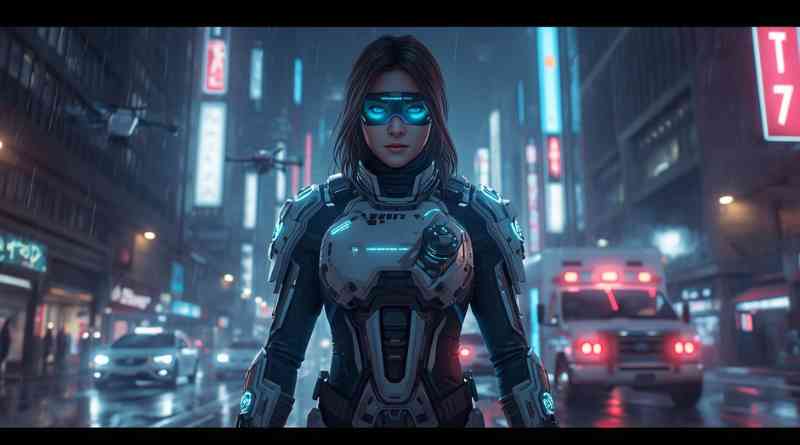
Gloria Hernandez EMT Cyberpunk Future Guide
The idea of futuristic healthcare has fascinated people for decades, but few concepts feel as exciting as the rise of cyberpunk emergency medicine. The phrase “Gloria Hernandez EMT Cyberpunk” represents more than just a futuristic medic. It reflects a world where advanced technology, artificial intelligence, wearable devices, and human compassion work together during life-or-death emergencies.
In many ways, this concept no longer feels impossible. Modern emergency medical services already use smart monitoring systems, telemedicine tools, AI-assisted software, and advanced communication devices. As technology evolves, the line between science fiction and reality continues to blur.
Gloria Hernandez stands as a symbol of that future. She represents a highly trained emergency responder operating in a fast-moving cyberpunk world filled with neon-lit cities, connected healthcare systems, intelligent machines, and constant technological innovation. Yet despite all the advanced tools around her, one thing remains unchanged: saving human lives still depends on empathy, quick thinking, and real human judgment.
Who Is Gloria Hernandez in the EMT Cyberpunk World?
Gloria Hernandez is often imagined as a next-generation emergency medical technician working in a technologically advanced urban environment. Unlike traditional EMTs, she operates in a world where artificial intelligence, cybernetic systems, wearable medical devices, and augmented reality are part of everyday emergency response.
In the cyberpunk setting, cities are crowded, hyper-connected, and heavily dependent on technology. Traffic systems are automated, surveillance networks cover entire districts, and medical data travels instantly through cloud-based systems. Gloria works within this intense environment while responding to emergencies that are far more complex than today’s medical incidents.
What makes Gloria unique is her ability to combine advanced medical technology with human instincts. Machines can analyze symptoms, predict risks, and monitor vital signs, but patients still rely on her calm communication, emotional support, and critical decisions during emergencies.
Her role reflects the future possibility of healthcare workers becoming both medical professionals and technology specialists.
What Does “EMT Cyberpunk” Actually Mean?
The term “EMT Cyberpunk” combines emergency medical services with cyberpunk themes. Cyberpunk is a science fiction genre focused on advanced technology mixed with social challenges, urban expansion, corporate influence, and digital lifestyles.
In healthcare, cyberpunk medicine imagines a future where emergency responders use highly advanced tools during rescue operations. This includes:
- AI-assisted diagnostics
- Smart ambulances
- Real-time biometric tracking
- Drone-assisted rescue systems
- Cybernetic medical implants
- Augmented reality treatment interfaces
Unlike traditional sci-fi concepts that focus only on futuristic gadgets, cyberpunk healthcare also explores ethical concerns. Questions about privacy, human dependence on machines, and the emotional impact of technology become central themes.
The concept of Gloria Hernandez EMT Cyberpunk works because it combines realism with imagination. Many of the technologies imagined in cyberpunk stories are already appearing in modern hospitals and EMS systems today.
How Emergency Medical Services Could Look in the Future
Technology is rapidly changing healthcare, and emergency medical services may experience some of the biggest transformations.
Smart Ambulances
Future ambulances may become mobile emergency treatment centers rather than simple transportation vehicles. Smart ambulances could use AI-powered systems to analyze patient conditions before arrival at the hospital.
Features may include:
- Automatic route optimization
- Real-time communication with hospitals
- Robotic medical assistance
- AI-driven triage systems
- Instant patient data synchronization
These systems could reduce response times and improve survival rates during critical emergencies such as cardiac arrest or severe trauma.
Wearable Medical Technology
Wearable healthcare devices already exist today in the form of smartwatches and biometric trackers. In the future, these systems may become far more advanced.
Patients could wear devices capable of:
- detecting heart abnormalities
- predicting strokes
- monitoring blood oxygen levels
- alerting emergency responders automatically
For someone like Gloria Hernandez, this data would allow faster decision-making before reaching the patient.
Augmented Reality for EMTs
Augmented reality could completely change how EMTs work in dangerous environments.
AR glasses may allow emergency responders to:
- view live patient vitals
- receive treatment suggestions
- identify injuries quickly
- communicate with remote doctors
- navigate disaster zones safely
Instead of relying only on memory, EMTs could access instant medical support directly in their field of vision.
Drone-Assisted Emergency Response
Drones may play a major role in future EMS systems. They can move quickly through traffic, reach remote locations, and provide instant situational awareness.
Possible uses include:
- delivering defibrillators
- scanning accident scenes
- transporting emergency medications
- locating injured people during disasters
In crowded cyberpunk-style cities, drones could become essential tools for faster emergency response.
Gloria Hernandez’s Advanced Medical Tools and Gadgets
One of the most fascinating aspects of the Gloria Hernandez EMT Cyberpunk concept is the advanced medical technology she uses during emergencies.
| Technology | Purpose | Benefit in Emergencies |
|---|---|---|
| AR Medical Visor | Displays live patient information | Faster medical assessment |
| AI Diagnostic Assistant | Suggests treatment options | Reduces response delays |
| Smart Trauma Suit | Protects EMTs in dangerous environments | Improves responder safety |
| Nano-Med Injection Kit | Delivers rapid internal treatment | Stabilizes patients quickly |
| Medical Drones | Survey accident scenes | Faster rescue coordination |
| Biometric Scanner | Reads body vitals instantly | Improves patient monitoring |
| Neural Communication Device | Hands-free communication | Better team coordination |
These tools are futuristic, but many are inspired by technologies already under development in healthcare industries worldwide.
A Day in the Life of a Cyberpunk EMT
Imagine Gloria Hernandez responding to a medical emergency in a densely populated smart city.
An AI system alerts her team about a possible cardiac event before the patient even calls for help. Wearable health sensors detect abnormal heart activity and automatically transmit data to the emergency network.
As Gloria enters the autonomous ambulance, the onboard system maps the fastest route using live traffic analysis. A drone arrives ahead of the ambulance and scans the apartment building for safety hazards.
Inside the building, Gloria uses augmented reality glasses to review the patient’s medical history instantly. Her AI assistant suggests possible treatment options while remote specialists monitor the situation in real time.
Despite all the technology around her, the patient remains frightened and confused. Gloria calms them, explains what is happening, and reassures family members. This moment highlights an important truth about futuristic healthcare: technology may improve efficiency, but human compassion remains essential.
The Human Side of High-Tech Emergency Care
One major concern about AI-driven healthcare is whether machines could eventually replace human medical professionals. However, emergency medicine depends heavily on emotional intelligence and rapid human judgment.
Patients in emergencies often feel panic, fear, confusion, or trauma. Technology can analyze symptoms, but it cannot fully replace empathy and emotional understanding.
Gloria Hernandez represents the balance between advanced medical systems and human care. She uses technology as a tool rather than a replacement for medical expertise.
Future EMTs may need additional skills beyond medical training, including:
- cybersecurity awareness
- AI system management
- digital communication skills
- ethical decision-making
- advanced data interpretation
Even in highly advanced healthcare systems, trust between patients and medical professionals will remain critical.
Biggest Challenges Faced by EMT Cyberpunks
While futuristic healthcare offers incredible possibilities, it also introduces serious challenges.
Technology Failures
Overdependence on technology can create dangerous situations if systems malfunction. Network failures, software bugs, or AI errors could delay treatment during emergencies.
EMTs must still know how to operate without automated support systems.
Cybersecurity Risks
Healthcare systems are already common targets for cyberattacks. In a cyberpunk future, emergency networks may become even more vulnerable.
Hackers targeting medical databases or emergency communication systems could put lives at risk.
Ethical Concerns Around AI Medicine
AI systems may eventually help make medical decisions, but ethical concerns remain. Questions include:
- Who is responsible for AI mistakes?
- Can algorithms make fair decisions?
- Should machines prioritize patients during mass emergencies?
These issues will likely become more important as AI expands into healthcare.
Privacy and Data Collection
Cyberpunk healthcare depends heavily on personal data collection. Wearable devices constantly monitor body activity and transmit medical information.
This raises concerns about:
- patient privacy
- surveillance
- data ownership
- corporate control of healthcare information
Balancing innovation with privacy protection will become a major challenge.
Mental Pressure on EMTs
Future EMTs may face even greater stress levels due to constant technological monitoring and information overload.
Managing AI recommendations, live diagnostics, and emergency situations simultaneously could increase mental exhaustion among responders.
Cyberpunk EMS vs Traditional EMS
The differences between modern EMS and cyberpunk EMS are significant.
| Traditional EMS | Cyberpunk EMS |
|---|---|
| Manual patient assessment | AI-assisted diagnostics |
| Standard ambulances | Autonomous smart ambulances |
| Radio communication | Neural communication systems |
| Paper or local records | Cloud-connected medical databases |
| Delayed specialist access | Instant remote consultation |
| Human-only monitoring | Biometric wearable tracking |
| Basic navigation systems | Predictive traffic AI routing |
Despite these advancements, both systems share the same goal: saving lives as quickly and safely as possible.
Real Technologies That Already Exist Today
Many ideas connected to Gloria Hernandez EMT Cyberpunk are surprisingly realistic.
Several hospitals already use AI-assisted imaging tools to help detect diseases faster. Telemedicine allows doctors to guide emergency teams remotely. Smart health wearables can monitor heart activity, sleep patterns, and oxygen levels.
According to healthcare industry reports, AI healthcare markets are expected to grow rapidly during the next decade due to increased investment in predictive medicine and automation technologies.
Other real-world technologies include:
- robotic surgery systems
- drone medical deliveries
- automated CPR devices
- remote patient monitoring
- smart hospital management systems
These developments show that futuristic EMS concepts may not be as distant as they once seemed.
Could Cyberpunk Emergency Medicine Become Reality?
Many aspects of cyberpunk healthcare are already developing today. Smart cities are becoming more connected, healthcare systems are becoming more digital, and AI tools continue improving.
However, a fully cyberpunk-style EMS system would require major advancements in:
- artificial intelligence
- infrastructure
- cybersecurity
- medical robotics
- wearable biotechnology
It would also require governments and healthcare providers to address ethical concerns carefully.
The biggest challenge may not be the technology itself. Instead, the challenge could be ensuring that human care remains central in an increasingly automated world.
Healthcare works best when technology supports professionals rather than replacing them entirely.
Why People Are Fascinated by Cyberpunk Healthcare
The popularity of Gloria Hernandez EMT Cyberpunk reflects a larger fascination with futuristic healthcare.
People are curious about:
- AI-powered medicine
- advanced rescue systems
- cybernetic enhancements
- smart city healthcare
- human survival in high-tech environments
Cyberpunk stories often explore both hope and fear. Technology can improve lives, but it can also create inequality, dependence, and loss of privacy.
This balance makes cyberpunk healthcare especially interesting because it feels believable. Many futuristic concepts are already appearing in small ways today.
The idea of emergency responders using advanced technology while still relying on human instincts creates a powerful and emotional image of the future.
The Future of EMS Training and Medical Education
Future EMTs may require very different training compared to today’s emergency responders.
Medical education could include:
- AI system operation
- drone coordination
- cybernetic device management
- digital patient analysis
- virtual reality simulations
Training programs may also use immersive VR environments to simulate dangerous emergency scenarios safely.
Gloria Hernandez represents a medic prepared for this new reality. She understands technology deeply while still maintaining strong medical instincts and communication skills.
The combination of technical knowledge and emotional intelligence may become one of the most valuable skills in future emergency medicine.
Conclusion
The concept of Gloria Hernandez EMT Cyberpunk offers an exciting look into the possible future of emergency healthcare. It combines advanced technology, smart medical systems, artificial intelligence, and human compassion into one evolving vision of emergency response.
While many cyberpunk ideas still belong to science fiction, modern healthcare is already moving toward smarter and more connected systems. AI-assisted diagnostics, wearable health trackers, telemedicine, and medical drones are becoming increasingly common.
Yet one lesson remains clear throughout every futuristic scenario: technology alone cannot replace human care. Emergency medicine depends on trust, empathy, quick judgment, and emotional understanding.
Gloria Hernandez symbolizes that balance between innovation and humanity. She represents a future where technology empowers medical professionals rather than replacing them. As healthcare continues evolving, that balance may become more important than ever.
FAQs About Gloria Hernandez EMT Cyberpunk
Is Gloria Hernandez EMT Cyberpunk based on a real person?
The concept appears to be more fictional or speculative than connected to a verified real-world EMT. However, the technologies and healthcare ideas connected to the concept are inspired by real developments happening in emergency medicine today.
Many modern EMS systems already use advanced communication tools, wearable monitoring devices, and AI-assisted technologies in limited ways.
What does cyberpunk healthcare mean?
Cyberpunk healthcare refers to futuristic medical systems influenced by advanced technology, artificial intelligence, cybernetics, and highly connected smart cities. It often explores both the benefits and risks of technology in healthcare environments.
These ideas commonly appear in science fiction but increasingly resemble real-world healthcare innovation trends.
Could AI replace EMTs in the future?
AI may assist EMTs with diagnosis, monitoring, and data analysis, but replacing human responders completely is unlikely. Emergency situations require empathy, emotional support, adaptability, and fast human judgment.
Technology works best as a support tool rather than a complete replacement for trained medical professionals.
Are smart ambulances already being developed?
Yes, several healthcare organizations are testing smart ambulance systems with connected monitoring devices, telemedicine support, and AI-assisted routing systems.
While fully autonomous ambulances are still rare, many EMS technologies are already becoming more advanced and digitally connected.
What are the biggest risks of futuristic EMS technology?
Some major concerns include cybersecurity threats, overdependence on automation, privacy issues, and ethical problems related to AI decision-making.
Healthcare systems must ensure that technology improves patient care without creating new dangers or reducing human oversight.
Why are people interested in cyberpunk emergency medicine?
People are fascinated because cyberpunk healthcare combines realistic medical innovation with futuristic storytelling. It reflects both excitement and concern about how technology could shape human survival and healthcare systems in the future.